

Harm van den Dorpel | Cloud Writings
14 February - 21 March, 2026
Venue : Takuro Someya Contemporary Art
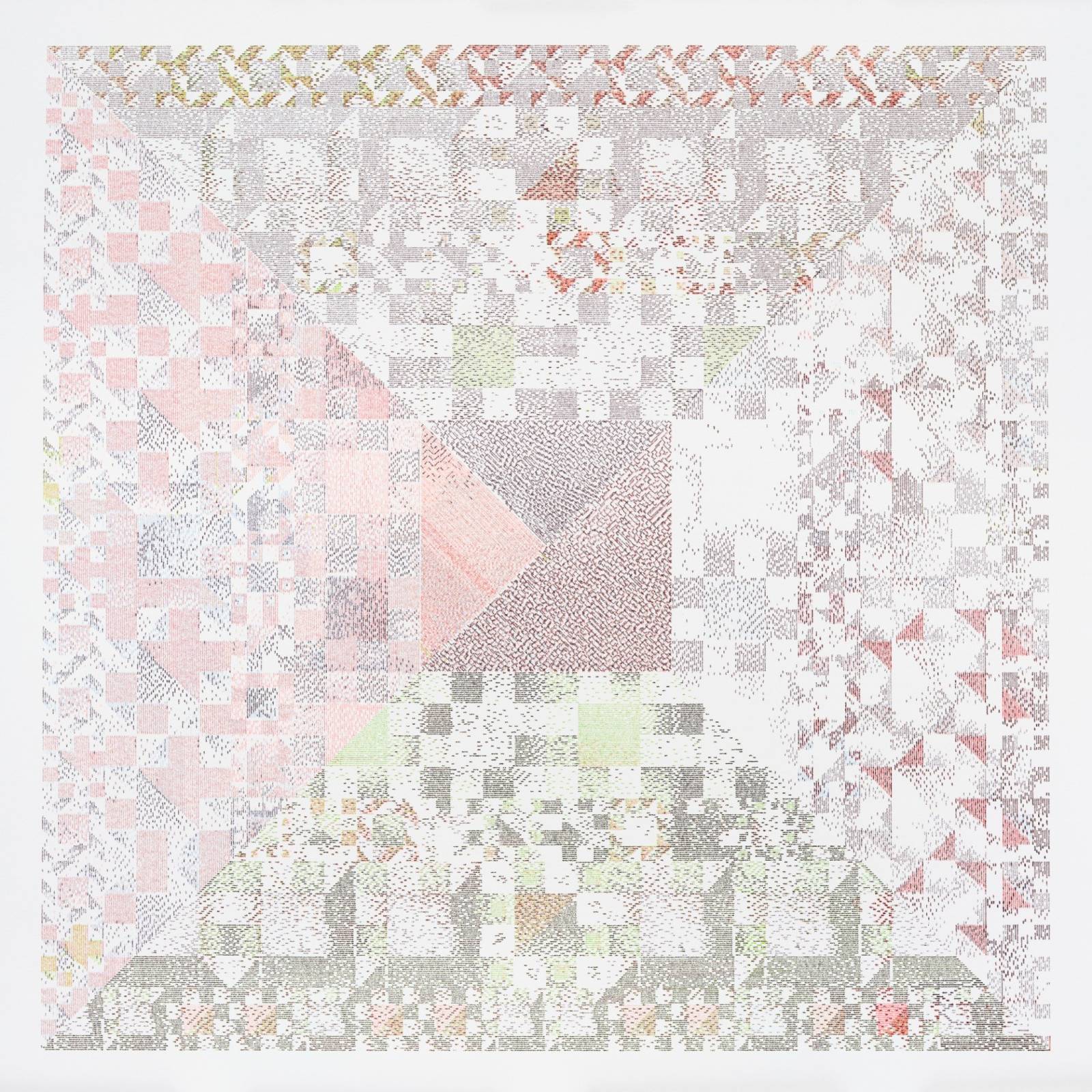
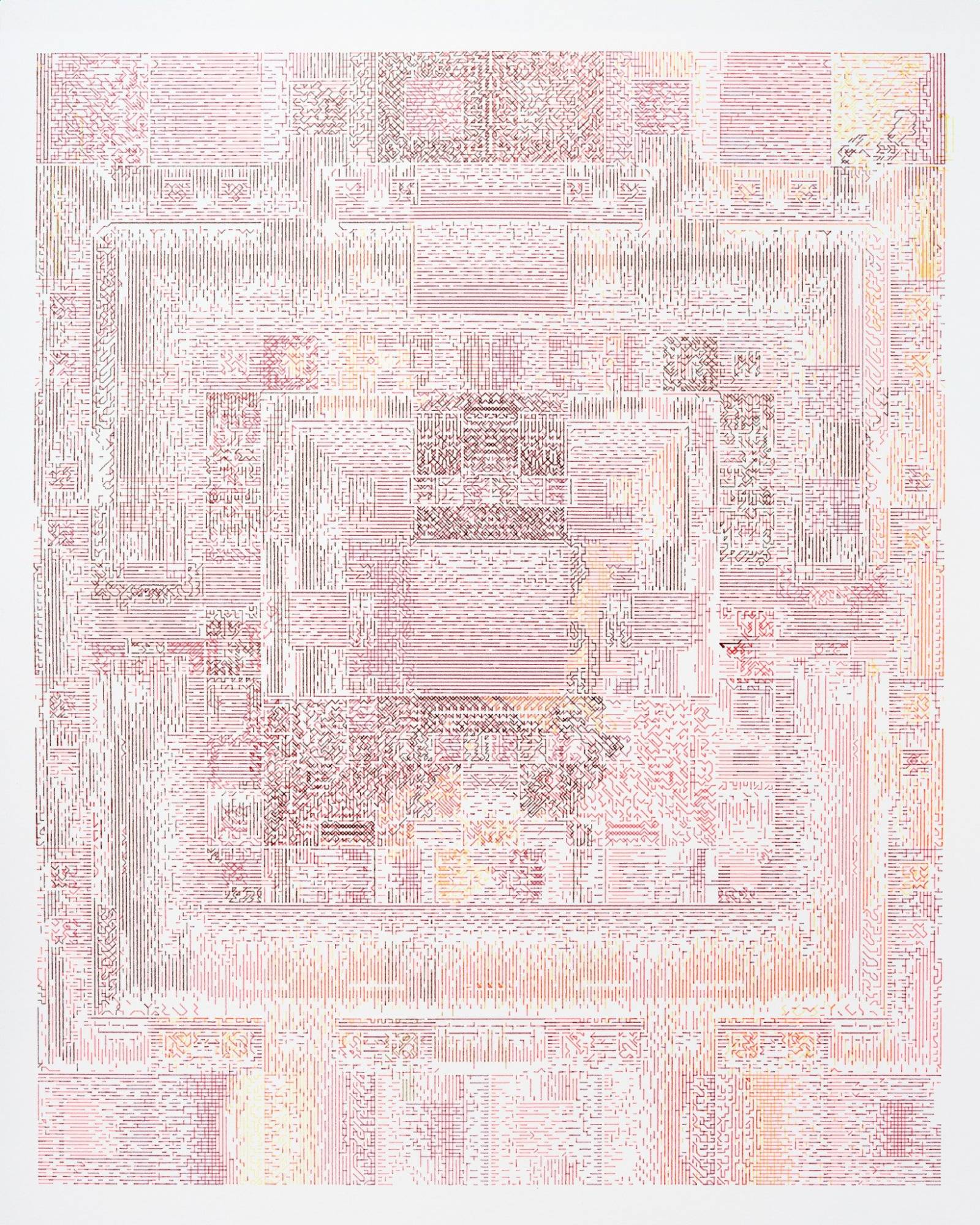
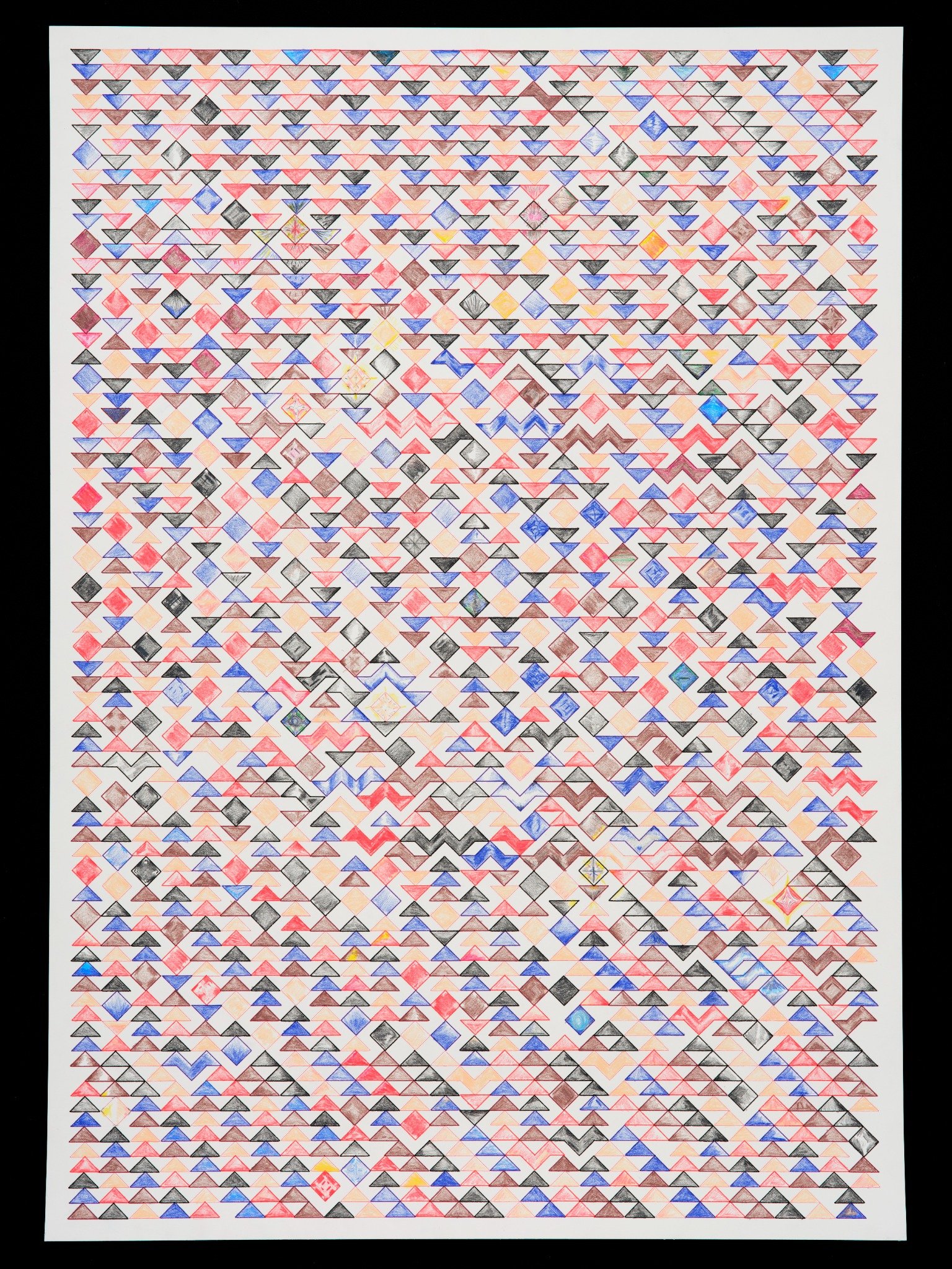
Takuro Someya Contemporary Art is pleased to announce the upcoming solo exhibition Cloud Writings by Harm van den Dorpel. This marks his first solo exhibition at the gallery and features a series of works including new pieces unveiled for the first time in Japan. In this exhibition, van den Dorpel presents algorithmic drawings shaped by his generative practice and the ideas of female artists active in minimalism and conceptual art in the late 20th century.
Cloud Writings
In my solo exhibition Cloud Writings, I present works that emerged from my exploration of my own roots in generative art—an effort to identify and honor my influences.
Since 2019, I have dedicated myself to researching artists such as Anni Albers, Vera Molnár, and Charlotte Posenenske, who are known for their systematic approach in creating work with two-dimensional grids, even before the computer as we know it was invented.
I develop contemporary algorithms inspired by these historical ones—a methodology I call “algorithmic archeology”. With these algorithms, I devise computer programs to instruct plotting machines. A plotter is a specialized mechanical device that creates precise technical and architectural drawings by moving pens or markers across paper on an X-Y axis. Unlike printers, which apply ink in lines from left to right, top to bottom, the plotter draws lines in all directions. This process gives drawings an organic quality that goes beyond the precision of digital prints. The plotter draws lines in all directions, and through its slow, mechanical movement creates unique and unrepeatable results that bring a human and unpredictable materiality to my digital works.
The drawings are composed of two-dimensional grid structures: rows and columns of repeating elements. They refer to the process of writing text and the process of weaving textile. Their designs touch on religious and heraldic imagery. Some drawings I made partially by hand, which was a rich and meditative commitment for me.
Besides plotted works on paper, I have installed multiple digital works on screen to give insight into the inner workings of the algorithms that created the drawings, allowing the viewer to experience the potentially infinite possibilities from which the material works emerged.
Harm van den Dorpel
Harm van den Dorpel discovers new forms of aesthetic possibility in emergent, screen- and pattern-based imagery, using custom-coded programs that draw on a wide range of knowledge and technologies—from genetics to blockchain. Through iterative calibration and feedback loops, his practice generates suggestive, open-ended images that tap into our latent memories of digital experience, opening new modalities for viewers to encounter code as a medium. In doing so, it prompts reflection on how data is embedded within a composition and how, through its relations with other elements, it becomes abstracted. This exhibition foregrounds the material outcomes of code—ink on paper, brush pressure, paper tooth—introducing van den Dorpel’s new bodies of work in which dots, lines, and brush sequences make visible how data is embedded, abstracted, and ultimately made legible—inviting viewers to ask not only what they see but how images come to be.
The exhibition features Cloud Writings (2024–), a series of plotter drawings in which a two-axis machine, running the artist’s bespoke algorithms, lays fine dots and lines across watercolour paper with disciplined regularity. Pigment rematerialises pixel logic: cross-hatched micro-marks and diagonal lattices yield a surface recalling the matte tactility of LCD imagery. Echoing Impressionist experiments in broken colour and optical mixing, compositional density invites the eye to fuse tones and register atmosphere, as both computational output and a study of light. While code governs sequence and spacing, the unpredictable contingencies of ink on paper turn each drawing into an event of inscription. The plotted field reads as a measured performance of code, where minute variations in pressure and paper tooth accumulate into perceptible texture.
A suite of works—including, Leaky Abstraction (2025)—specifically refers to Anni Albers’s pattern logics, extending the artist’s dialogue with weaving by encoding them as procedure. Studying Albers’s interlaced geometries—meander repeats, stepped diagonals, warp/weft offsets, and deliberate slippages—he derives rule sets for how units join, drift, and realign. These are compiled into a generative algorithm designed to “leak,” echoing the programming concept that abstractions never fully contain complexity; phase shifts and minor jitter are allowed to surface. The file is then executed by a plotter fitted with a Sakura pigment pen, which layers thousands of short strokes to build spatial depth and moiré fields. From a distance the image reads as crisp geometry; up close, a dense field of plotted strokes—a code-generated warp/weft lattice—renders an algorithmic analogue to Albers’s weaving, where structure yields both image and tactility.
Brush-plotter drawings in ink on watercolour paper—such as Bamboo (2025) and Bones (2024)—push van den Dorpel’s code into a calligraphic register. These works stage rule-based lattices and meanders as single-stroke sequences: the plotter lifts and re-lands a brush pen to trace scalloped borders, stepped diagonals, and mesh-like crossings, so that thickness, overlap, and slight drag register as tactile texture. A signature seal appears with the editions. Here the artist consciously adopts Chinese seal culture—where owners mark documents and artworks—and has produced two types of seals, echoing the yin-yang distinction; he links this chain of stamped ownership to the logic of blockchain provenance. In this series, authorship, registration, and material inscription converge: algorithmic procedure yields a brush-borne image, then a seal fixes its social life.
Situated within a lineage from Impressionist optics through Bauhaus weaving to early algorithmic art, the exhibition reframes systems-based practice as a question of perception, where logic structures choice, allowing abstraction to appear as organised perception. Coding becomes a method, translating procedures into material decisions the eye can read: interval, density, and cadence are brought to the surface in ink. Rules give sensibility a contour without foreclosing it, so that the contingencies of nib, paper tooth, and plotted tempo disclose what concepts alone leave unsaid. What the viewer encounters, finally, is a claim about thinking-through-making, where procedure becomes a way of seeing and seeing, in turn, tests the reach of abstraction in the present.
Takuro Someya Contemporary Art
Harm van den Dorpel
Born in 1981, Zaandam, The Netherlands. Currently lives and works in Berlin, where he works across sculpture, collage, computer animation, computer graphics, and interaction design. In 2015 he co-founded left gallery—an artist-run online platform that produced and sold downloadable, editioned digital works using blockchain—and, in the same year, the MAK – Museum of Applied Arts, Vienna, acquired his screensaver Event Listeners, widely noted as the first museum acquisition transacted in bitcoin. Exhibitions include UCCA Center for Contemporary Art (Beijing, 2014), ZKM (Karlsruhe, 2015), the Museum of Modern Art in Warsaw (2017), and National Museum of Modern and Contemporary Art (Seoul, 2019). His work is held in public and private collections internationally, including the Stedelijk Museum Amsterdam and the KADIST Foundation.
[Exhibition Details]
Harm van den Dorpel|Cloud Writings
Exhibition Period: Saturday, February 14, 2026 – Saturday, March 21, 2026
Reception: February 14, 3:00 p.m. ‒ 6:00 p.m.
Open: Tue-Sat, 11:00 a.m. – 6:00 p.m.
Closed: Sun, Mon and National Holidays
Takuro Someya Contemporary Art
TSCA 3F TERRADA Art Complex I 1-33-10 Higashi-Shinagawa Shinagawa-ku Tokyo 140-0002 Japan
tel 03-6712-9887 |fax 03-4578-0318 |e-mail gallery@tsca.jp
Cooperation: Upstream Gallery Amsterdam